
Where Tulsa County Directories Stay
Tulsa’s historical directory shelf is centered at Tulsa City-County Library, with different collections serving different years and forms of access. The Central Library Research Center and Oklahoma Room keep the main local run, documented as dating back to 1909. The Genealogy Resource Center at Hardesty Regional Library has a separately identified group of volumes. The public digital collection is a useful remote starting place, but the accessible collection description does not establish a complete online year-by-year run. Request a specific year before making a research trip or treating an online gap as a missing publication.
| Directory collection | Verified coverage | Holding location | Practical access |
|---|---|---|---|
| Main Tulsa city-directory run | Dating back to 1909 | Central Library Research Center / Oklahoma Room | Appointment-based research; request the needed volume. |
| Hardesty Tulsa directory set | 1928–1932, 1939–1941, and 1948 | Hardesty Regional Library Genealogy Resource Center | On-site local genealogy material. |
| Digitized City Directories | Collection exists; complete online run not verified | TCCL Digital Collections | Browse remotely, then verify volume year and imprint. |
| Reverse or criss-cross volumes | Exact Tulsa run not verified | Ask Central Research Center / Oklahoma Room | Do not assume every year has an address-order volume. |
| Federal census | Released census through 1950 | TCCL subscription access and federal resources | Use the directory year with the nearest released census. |
These records are complementary. A directory is a commercial compilation, while the census is a federal enumeration released on a privacy schedule. Neither should be forced to match the other exactly. Publication timing, address formats, and who was included can differ.
Tulsa County City Directory Since 1909
The Central Library’s Oklahoma Room is the strongest local route when a year is not in the Hardesty subset or the digital collection. Along with directories, the Research Center holds newspaper clippings, maps, yearbooks, local books, and physical archival collections. Access is normally by appointment, with the library describing a usual limit of one hour per day and a 48-hour advance booking request through 918-549-7323. That planning step matters for a surname trail with several missing years.
Start by noting the printed year, the surname as printed, the full street expression, and any initial or spouse notation. Preserve that wording even when it differs from a present-day search form. Tulsa’s numbered-street pattern uses Admiral Boulevard as the east-west street division in much of the central city, while older north-side names can be alphabetic. A map can keep an older directory address from being mistaken for a new location merely because its direction or street form differs.
Tulsa County Directory Timeline
Tulsa’s people-and-place research trail has several useful starting points. The dates below mark documented collections or access changes. They are not a claim that one source replaces the others.
| 1907 | Marriage Books 1–30 begin in the Library’s historical holding. |
|---|---|
| 1909 | The Central Library’s documented Tulsa city-directory run begins. |
| 1928 | The County Clerk’s current name-index description begins, while Hardesty’s identified directory subset also begins. |
| 1948 | Last year in the separately documented Hardesty directory subset. |
| 1950 | Latest federal census identified as released through TCCL’s stated privacy rule. |
For an earlier name, the timeline points toward library holdings, County Clerk historical resources, and other dated local material. It does not mean older land or family records ceased to exist before a modern online search field begins.
Hardesty’s Tulsa County City Directories
The Hardesty Genealogy Resource Center identifies nine specific Tulsa directory years: 1928 through 1932, 1939 through 1941, and 1948. That precise list is useful because it is documented, but it is not a claim that all other years are unavailable elsewhere. Hardesty is at 8316 E. 93rd Street and maintains books, microfilm and microfiche, map and atlas resources, surname vertical files, and viewers. Its published contact number is 918-549-7691.
A directory year can anchor a family-history timeline between census dates. The Genealogy Center also has a Tulsa County bride and groom microfiche index for 1907–1987 and local funeral-home material. Those are finding aids, not substitutes for a custodian’s official copy, but they can help test whether a name change, marriage, or death belongs in a household timeline.
See the Genealogy Center’s resource information before visiting the local collection.
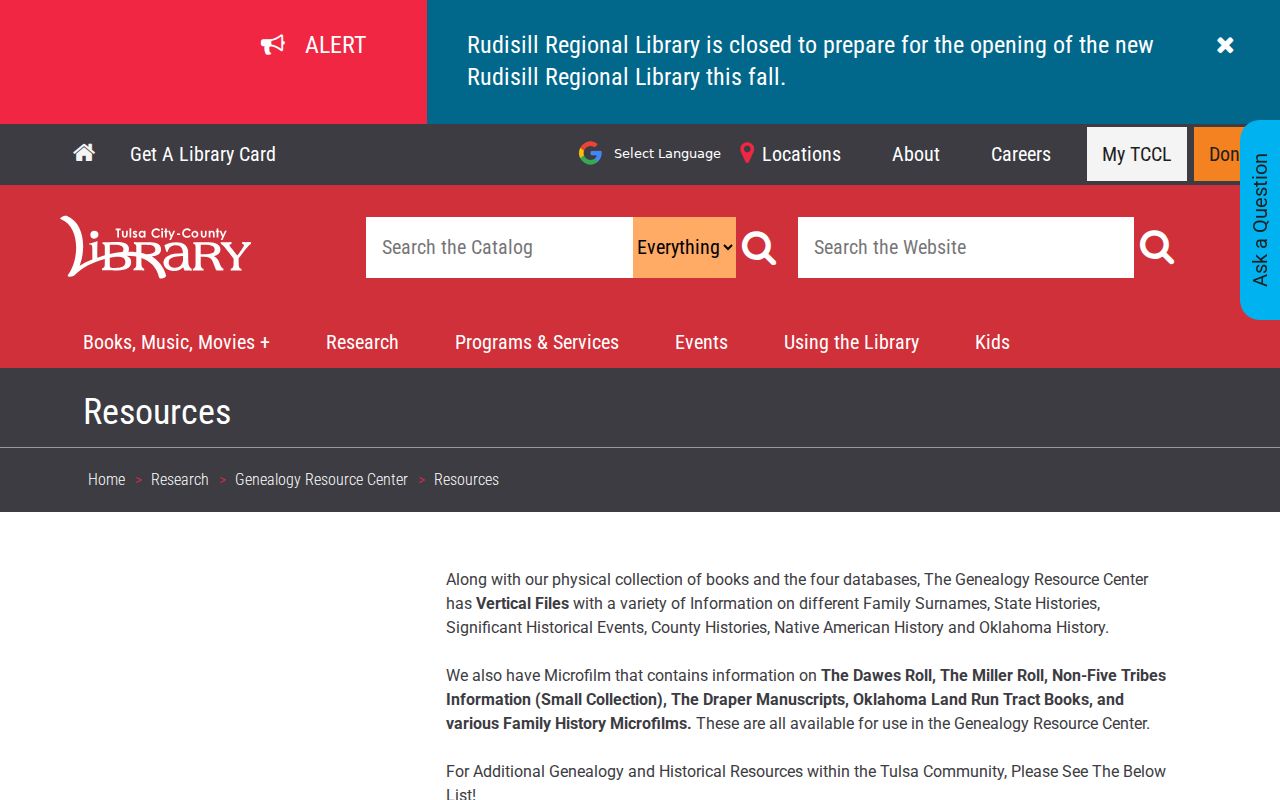
Library holdings are best used with the exact year in mind, since the documented Hardesty set is selective and the broader Central Library run is held separately.
How Tulsa County Directories Read
A Tulsa city directory entry usually supplies a name and address and may include a spouse name or an occupation. The digital collection description also confirms business directories and advertisements. That is useful evidence for sorting similar names, but it is not an official ownership or household roll. The exact abbreviations, layout, and optional fields belong to the particular volume. Read the front matter before assigning a meaning to a letter, symbol, or parenthetical note.
| Name | Record the surname, given name, initials, and spelling exactly as printed. |
|---|---|
| Address | Keep the full house number, street name, direction, and any printed form that appears. |
| Occupation | When present, it can help distinguish people with the same name. |
| Spouse notation | When present, it is a comparison detail, not proof that every household member is listed. |
| Business listing or advertisement | May provide a dated commercial context separate from the residence listing. |
- Criss-cross directory
- A reverse, address-order directory that can connect a street address to a listed occupant when a volume for that year is available.
- Householder entry
- A listing for the person the commercial publisher chose to include; it is not a complete count of everyone at the address.
- Abbreviation key
- The volume’s front-matter explanation for its own shorthand. Photograph or note it before interpreting an unfamiliar mark.
Tulsa County City Directory Online
TCCL’s digital City Directories collection supports a first pass from home. Its description identifies resident addresses and occupations alongside business listings and advertisements. The source material does not enumerate every digitized year or publisher in accessible text, so the safer practice is to identify the year shown on the item itself and then compare it with a physical or other verified copy when a detail matters.
Open the TCCL Digitized City Directories collection to begin a remote search.
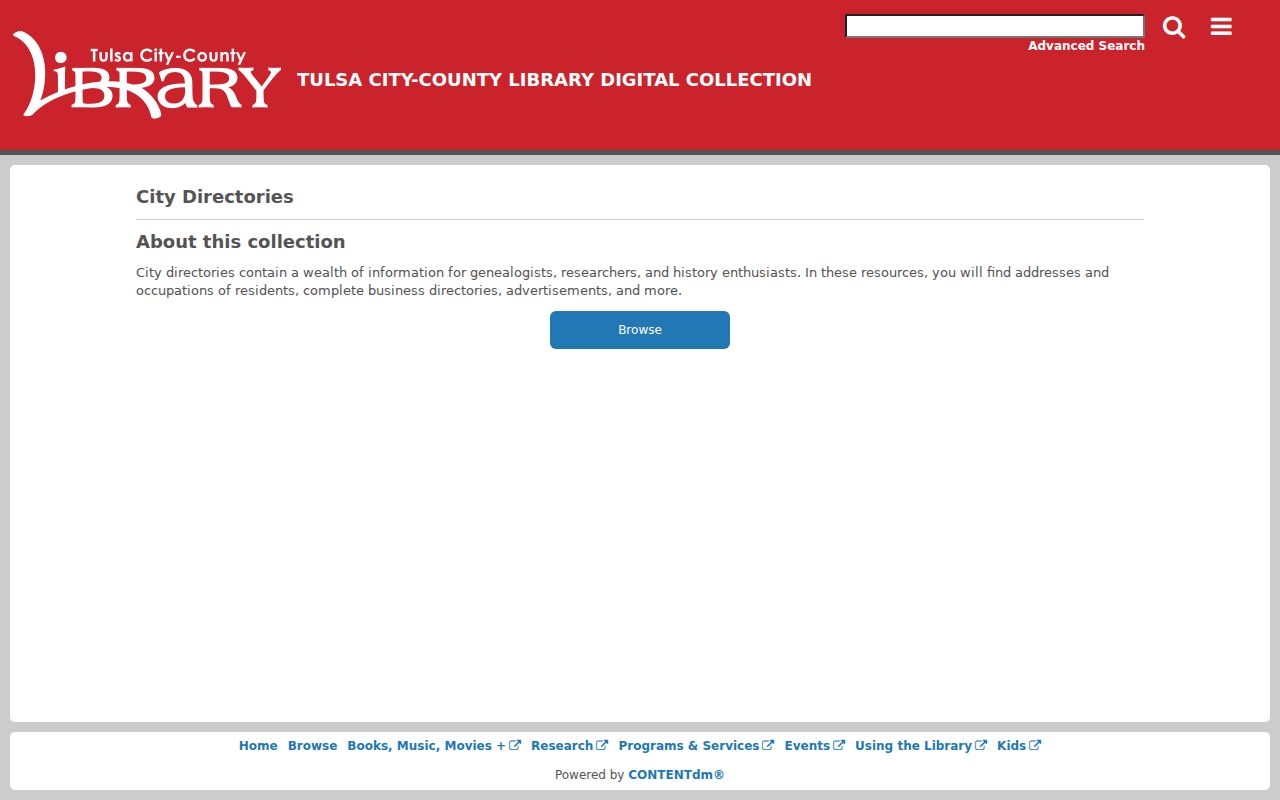
Digital access is especially helpful for comparing spellings across years, while the Central Library remains the fallback for a volume not represented online.
Tulsa County Directory Addresses
Place records make a directory address more reliable. The Library of Congress provides a two-sheet June 1896 Tulsa Sanborn map, and library materials describe Tulsa Sanborn resources for later years. TCCL also holds historical maps and aerials from the 1950s and 1960s arranged by township, range, and section. These sources show structures, streets, and development patterns. They do not name every person who lived there.
For a particular parcel, compare the printed address with the Assessor’s situs and legal description. A platted lot may use subdivision, lot, and block wording; an unplatted parcel may use section, township, range, or metes-and-bounds language. The legal description ties a deed to the land even if an address was later standardized or a street name changed.
Tulsa County Directory Notices
When a name fades from city directories, the Tulsa World death-notice index can supply a next research date. TCCL’s index covers 1963–1990 and returns a person’s name and notice date, sometimes with age, occupation, or service information. A death notice is not the obituary text, and the Library specifically cautions that obituaries were classified ads and were not indexed. Search surname variants and beginning-letter fragments when the printed spelling is uncertain.
Central Library Annex microfilm for the Tulsa World and Tulsa Tribune, cemetery binders, the Genealogy Center’s funeral-home indexes, and probate records can provide corroborating context. Their roles differ: a notice marks a publication date, a cemetery source may identify burial information, and a probate matter may document an estate. Do not turn any one of them into proof that a particular person occupied an address without matching the date and other details.
Trace Tulsa County Directory Households
A household trail works best as a sequence of dated comparisons. Choose the earliest known directory year, then work forward and backward through available volumes. Compare the residence spelling, spouse notation, and occupation where present. If a reverse directory exists for the same year, use it only as an address check, since Tulsa’s complete reverse-directory run has not been documented. Pair the surviving directory entries with the nearest released census and a parcel or deed record when land history is relevant.
- Locate the surname or known address in one dated Tulsa directory and record the entry exactly.
- Check the directory year before and after for a first appearance, last appearance, or address change.
- Compare spelling, initials, spouse details, and occupation before deciding two entries concern the same person.
- Use an available reverse directory to test the address, then retain the year of that volume in the notes.
- Match the dated trail with the nearest released census, recorded parcel history, and a newspaper or probate source where needed.
A disappearance can reflect a move, death, a changed name, military service, or an omission. It needs a second dated source. Census records through 1950 are available through the Library’s stated 72-year access rule, but a census enumeration date is not the same as a directory publication date.
Tulsa County Directory Limits
Directory research is strongest when its limits stay visible. The sources do not verify a complete digital run, a full Tulsa criss-cross year list, or a universal entry key. The Central Research Center’s appointment path is normal research practice, not a failure of the web search. Oklahoma State Archives is another historical fallback, but it currently asks researchers to contact the archive four to six weeks before a visit so material can be retrieved.
The Oklahoma Room also preserves vertical files with selected Tulsa World and Tulsa Tribune articles, reports, brochures, organization material, and home or building ephemera. Search the Library catalog with a subject word plus “vertical file” to identify a possible folder before a visit. This is a contextual source, not a comprehensive name index. For the Tulsa World, the searchable death-notice index has a defined 1963–1990 span, while later notices use a library subscription route; older newspaper work may require microfilm or staff help. The collections can supply community context for a directory address, but the printed directory remains the dated source for its own entry.
Keep the dates attached. A city-directory listing supports a historical association for that volume’s period. It does not establish a present address, complete household membership, or legal title.